
Beyond Growth
For years, I thought the goal of business was growth. Not because I had some particularly simplistic view of what makes a good company, but because growth was the language through which we tended to understand progress. I have been a CEO, built companies, worked internationally, and spent much of my career thinking about sustainability and what it means to build businesses that can endure. I have chased ambitious goals, worried about revenue, thought about strategy, teams, and customers, and spent plenty of time looking at the familiar lines on a graph that tell us whether a business is moving in the right direction. Growth was simply part of the landscape.
Then, at some point, I started asking a different question: what if the real goal is to build something you actually want to stand in?

Image by @hgf on Instagram
It is a small language change, but I think it changes quite a lot about how we think about business. We have become extraordinarily good at measuring growth, but much less comfortable talking about what that growth is actually creating. Revenue can be increasing while trust is declining. A company can be hiring rapidly while becoming a worse place to work. Customer numbers can be rising while the relationships themselves become increasingly transactional. A business can be getting bigger while becoming something that the people inside it no longer particularly enjoy being part of.
Perhaps this is because we have confused growth with flourishing.
Growth is attractive because it is comparatively easy to measure. We can put a number against revenue, headcount, customers, market share, or valuation and then watch that number change. We can build targets around it and celebrate when we reach them. Flourishing is harder to capture. It asks a different question: not simply whether something is getting bigger, but whether it is becoming healthier, more resilient, and more alive.
I have been thinking about this through the metaphor of a meadow. A meadow is not a machine, and it isn’t really a collection of individual plants either. It is a living system in which everything is connected to everything else. Some things compete for resources, some support one another, some flourish in particular conditions and disappear in others. There are seasons of abundance and seasons of dormancy. There are boundaries, relationships and dependencies that aren’t immediately visible if you are simply looking at what is growing above the ground.
The more I think about it, the more a company begins to look like a meadow.
We often talk about organisations as though they are machines. We put inputs in and expect outputs to come out; we optimize processes, increase efficiency and try to make the system produce more. But a company is made up of people, relationships, stories, habits, incentives, culture and trust, as well as all the things that appear in a financial report. And all of these things are capable of growing, whether we have deliberately planted them or not.
Revenue grows, of course. So do teams, customers, products and markets. But so do complexity, bureaucracy, debt and internal politics. Gossip grows. So does the number of meetings. So does the distance between people when an organisation becomes too large or too fragmented for relationships to remain natural. Some of these forms of growth are obvious, while others happen quietly in the background until one day they have become part of the organisation’s character.
This is one of the things my experience in sustainability has taught me: you cannot look at one part of a system and pretend that the rest doesn’t exist. Ecological systems have a stubborn way of reminding us that consequences are connected to causes. If you plant garlic, you can’t expect tulips. What we put into a system shapes what eventually grows within it.
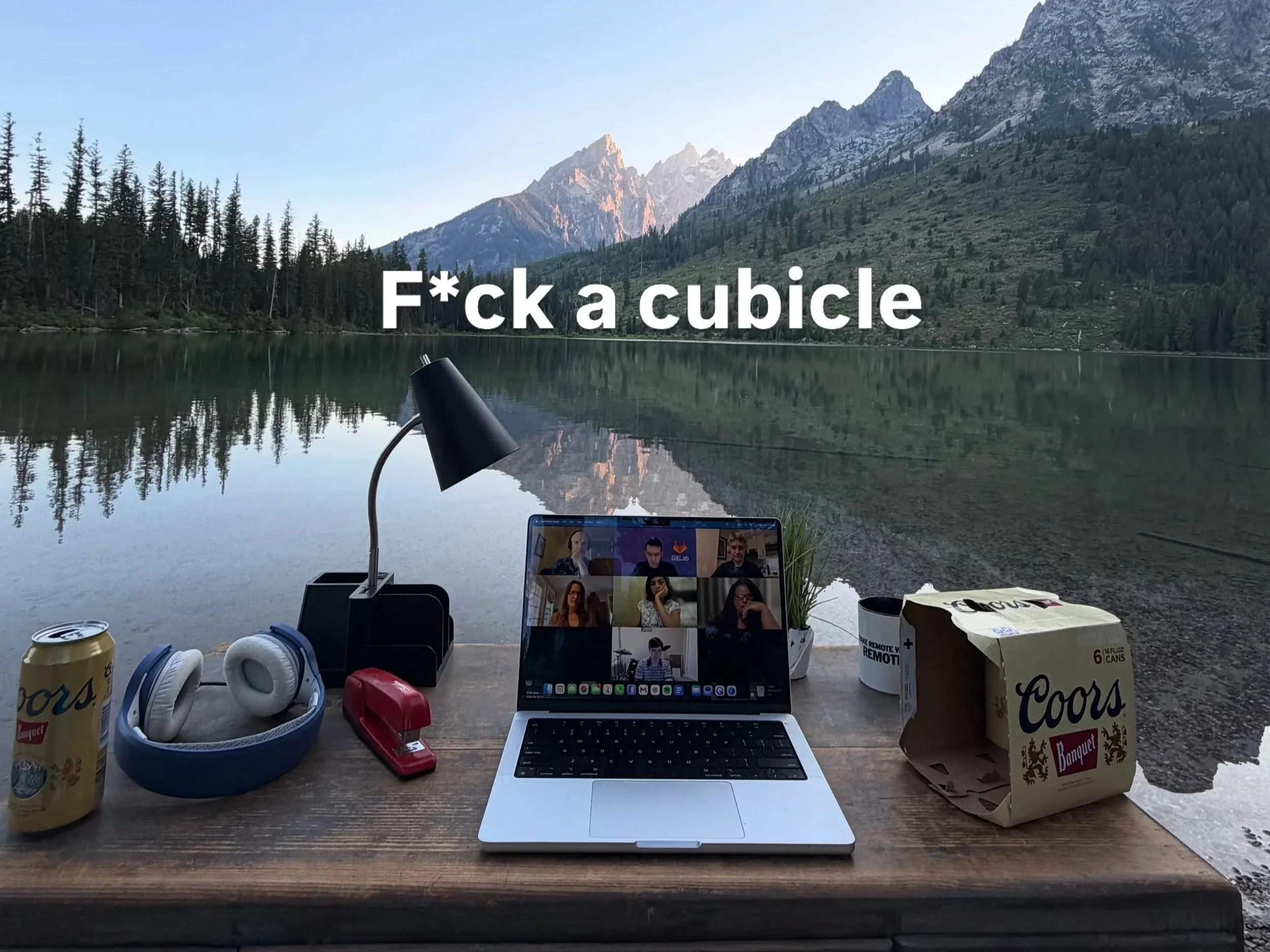
Image by @scottymuirhead on Instagram
The same is true of organisations. If we consistently reward competition between individuals, we shouldn’t be surprised when collaboration becomes difficult. If we reward constant availability, we shouldn’t be surprised when people become exhausted. If we measure success almost entirely through short-term financial performance, we shouldn’t be surprised when long-term relationships, experimentation and care become harder to protect.
The challenge is that we are often looking only at the things we have decided to measure. We notice the revenue line because it is on the dashboard. We notice the number of employees because someone reports it to us. We notice the customer acquisition figure because it is in the monthly review. Meanwhile, trust, culture, reputation, resentment, energy, and the quality of relationships are harder to put into a spreadsheet, and therefore easier to overlook. But they are growing too.
Perhaps one of leadership’s most important responsibilities is simply to learn how to see the whole meadow. To notice what is flourishing and what is being crowded out; what is taking more than its share of the available resources; what has quietly appeared because of the incentives we created; and what might be disappearing without anyone quite noticing. We cannot manage what we refuse to see.
There is another thing about meadows that feels relevant to the way we think about companies: they have edges.
This runs somewhat against our usual understanding of growth. We often behave as though growth means saying yes to more things: another opportunity, another market, another product, another customer, another initiative. But a living system needs boundaries because its resources are finite. There is only so much light, water, soil, and space, just as there is only so much money, attention, time, and human energy inside an organisation.
Without boundaries, everything begins to compete with everything else.
This is perhaps why some of the healthiest organisations I have encountered are not necessarily the ones pursuing the greatest number of opportunities. They are often the ones that have become quite clear about what they stand for. They know what they value, what they will prioritize and, importantly, what they will not. Strategy is partly about deciding where to put resources, but it is also about deciding what not to grow.
A meadow is not beautiful because every possible plant is growing in it. It is beautiful because a particular combination of things has found the conditions in which it can thrive.
Perhaps companies are the same. We don’t necessarily need to become everything. We need to become something.
That brings us to vision, although I have come to think about vision somewhat differently from the way it is often presented in business. Too often, strategy becomes a collection of numbers describing a future state: a certain level of revenue, a certain number of employees, a certain market position. These things can be useful measures of progress, but they are not really a picture of the future. Nobody is inspired by a spreadsheet. People are inspired by a picture of what could exist that does not yet exist.
What are we actually building? What will it feel like to work here? What kind of relationships will people have with one another? What will customers experience when they encounter us? What will be possible because this organisation exists? And, perhaps most importantly, what would make us proud of the thing we have built when we look back on it years from now?
These questions are harder than setting a target because they force us to decide what we mean by success. They move us away from achievement for its own sake and towards something closer to flourishing.
I think this is also where sustainability becomes much more interesting than the way we sometimes talk about it.
For years, sustainability has often been framed as a question of carbon, resources, reporting, compliance and environmental impact. All of these things matter, and increasingly they are simply part of the basic responsibilities of running a business (I hope). But underneath them is a much larger question about whether the systems we create are capable of continuing to thrive when circumstances change.
That is really a question about resilience.
And resilience is not necessarily about being the largest or the strongest. In living systems, resilience comes from the quality and diversity of relationships, from the ability to adapt, from having different forms of capability and from being connected enough that when one part of the system is disrupted, the whole doesn’t collapse.
There is something here that businesses can learn from nature. The organisations that survive periods of profound change are not necessarily the biggest ones. They are often the ones with healthy relationships, a degree of trust, the ability to adapt, diverse perspectives and capabilities, a sense of purpose, and enough connection between people that they can respond to problems together rather than simply retreat into their individual parts.
These things can look intangible when we are sitting in a boardroom discussing performance. But they become remarkably tangible when the conditions around the organisation change.
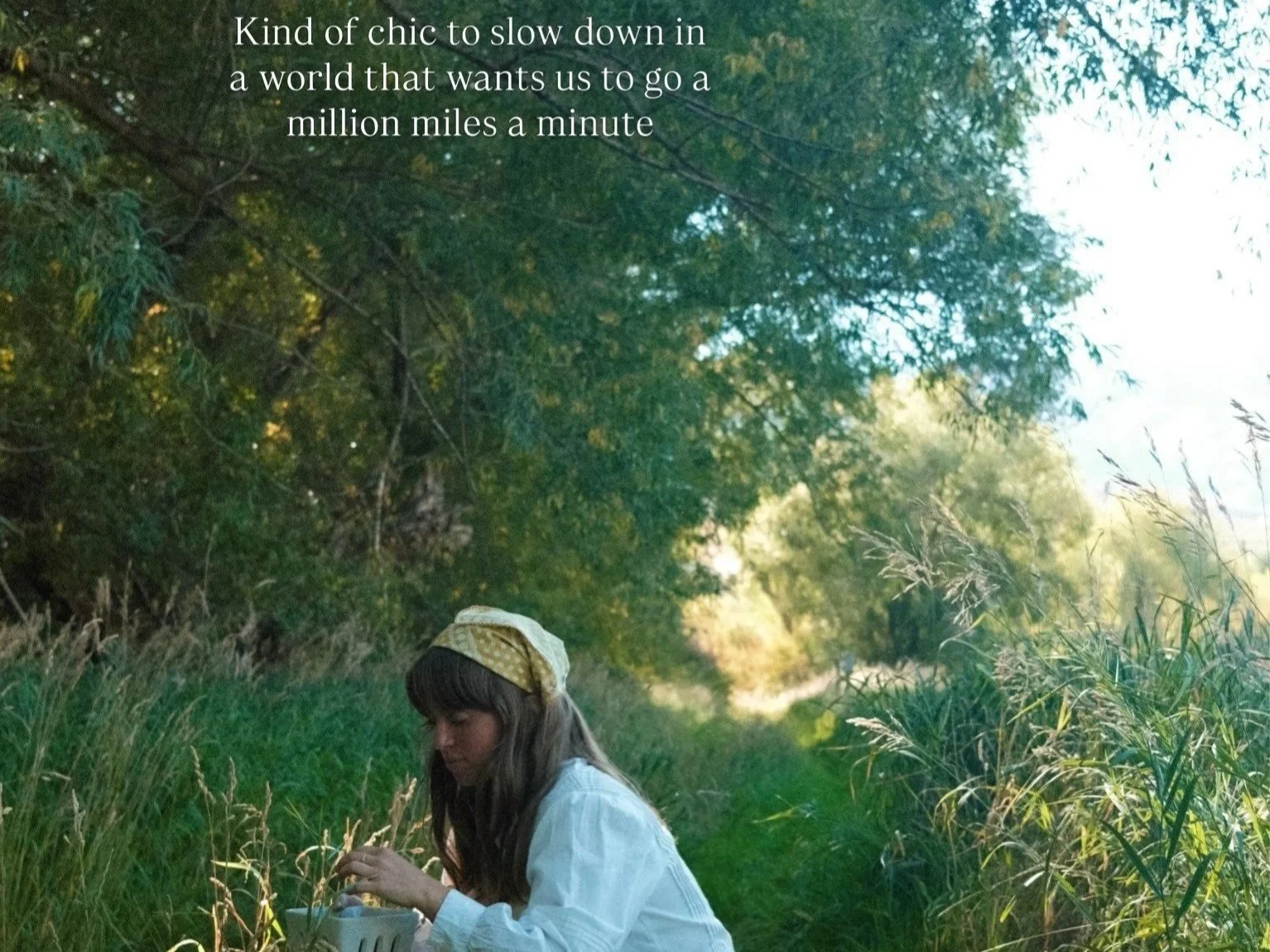
Image by @apkipps on Instagram
Perhaps this is what sustainability is really asking of us. Not simply how we reduce our impact, important though that is, but how we build organisations that can remain healthy in a world that is changing around them.
That doesn’t mean abandoning growth. I still believe in ambitious businesses, and I still believe that growth can be enormously positive. Growth can create jobs, spread ideas, generate resources for innovation, and give businesses the ability to have an impact at a scale that would otherwise be impossible.
But growth is a means, not a destination.
The older I get, the less interested I am in asking whether something is simply bigger, and the more interested I am in asking what it is becoming. Is it healthier? Are the relationships stronger? Are people proud to belong to it? Is it becoming more resilient, or simply more complicated? Does it have enough clarity to know what it is and what it isn’t? Does it create something that people genuinely want to be part of?
We spend an extraordinary amount of our lives inside organisations. We build them, lead them, work in them and depend upon them. The decisions we make about them shape the experiences of other people, often in ways that are much more significant than we realize at the time. Culture is created through thousands of small decisions about what we reward, what we tolerate, what we prioritize, and what we allow to grow.
Perhaps that gives us a different responsibility as leaders. Not simply to build something successful, but to build something worth inhabiting.
Something with enough ambition to matter, but enough boundaries to remain coherent. Something that can grow without consuming itself. Something that can adapt without losing its character. Something resilient enough to survive change and healthy enough to be worth sustaining. Something alive.
A meadow, perhaps, rather than a machine.
For many of us, building a business will take years of our lives. We will spend our energy, our attention, and our creativity trying to make something work, and if we are fortunate, something will grow.
But perhaps the more important question is not simply whether we built something that grew. Perhaps it is whether we built something we actually wanted to stand in.
Because growth is not the destination.
The real work is cultivating a meadow worth tending.
Ps. For transparency- AI was used to combine a bunch of my notes, writings, and speeches into one overarching text.
With love,
Alexandra