
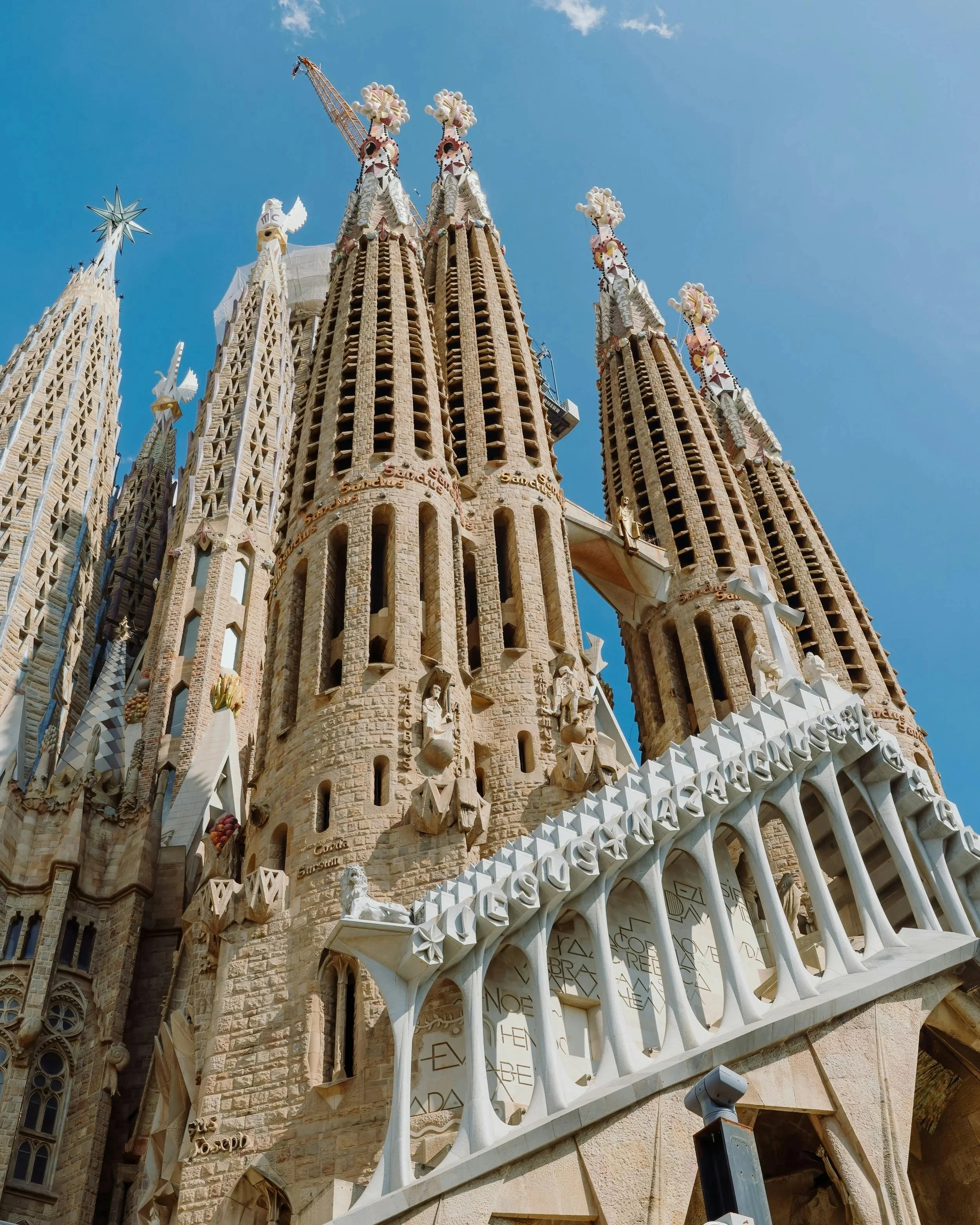
What Gaudí Knew About Building Things That Last
There is so much advice on how to position your blog/newsletter, how to provide value and increase your audience. With age, I'm getting slightly better at asking for advice in the right places- if even at all. Of course I want this blog/newsletter to be of value to you, but I’m also using it as a vehicle and a reason for me to go down a few rabbit holes that I find interesting. The challenge is often how to keep it to around 500- 1000 words and tie it up with a bow that represents me or what I'm trying to get across. Let's see if I succeed this time.
I was listening to a podcast the other day (that is apparently how 70% of my sentences start if you ask my eldest daughter) with Dr. Eva Selhub, physician and resilience expert, where she spoke about how nature influences our brains, bodies, relationships, and overall well-being. As she often does in her interviews, she talks at length about a concept called biomimicry (also called biomimetics), which is an interdisciplinary field that draws inspiration from nature’s forms, processes, and systems to solve human technical and design-related problems. A popular example of this is the invention of velcro, invented by George de Mestral after he studied how burrs stuck to his dog’s fur using tiny hooks.
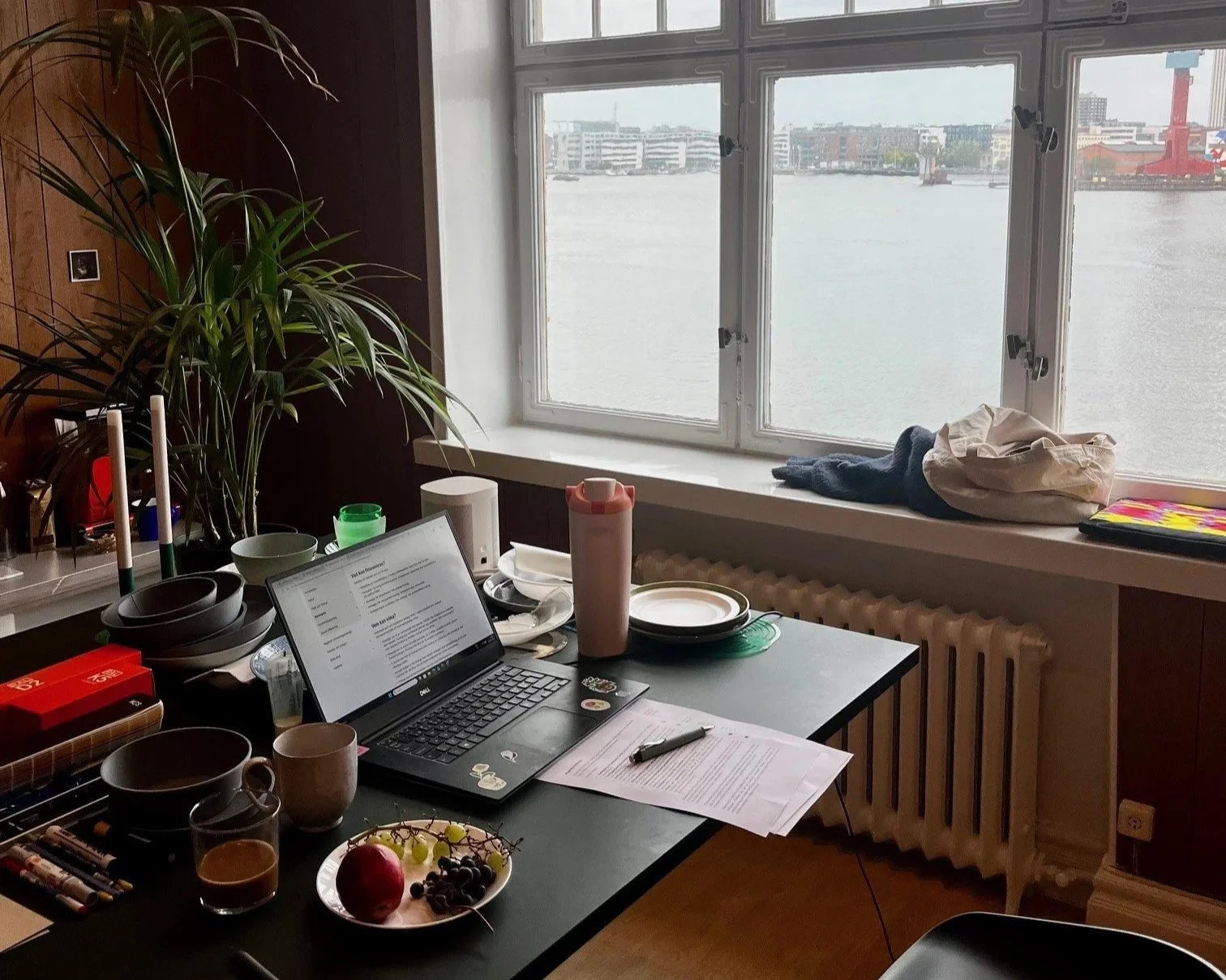
Substack or No Substack. That is the Question
I have gone back and forth on this for quite a while now, and honestly, I’m getting tired of myself. :) So I think when you get tired of your own thinking, it’s probably a sign that you need to make a decision. So I did. I’ve decided to go back to running my own newsletter through my website on Squarespace, and it feels so good. It feels like I’m building my own little home. A place for the things I believe in, the things I’m proud of, and the things I genuinely think could be helpful to entrepreneurs out there. A place that connects what I write about with what I do and the business I’m building.

Are We Overcomplicating Progress?
Today I wanted to talk about software and sustainability. Not on a top-level basis like Ecosia is better than Google, but more from a data and programming point of view. The reason I've been in this rabbit hole is that one of my new clients is actually a university (the same one where I was doing part of my PhD), and I was asked to do a guest lecture in a course called ‘Sustainable digitalization in practice ’, and wow, did that open Pandora’s box!?
Because of that, I have been discussing things like ‘AI’s energy problem’ from the perspective of someone who started with computers when every byte and bit mattered (my dad).
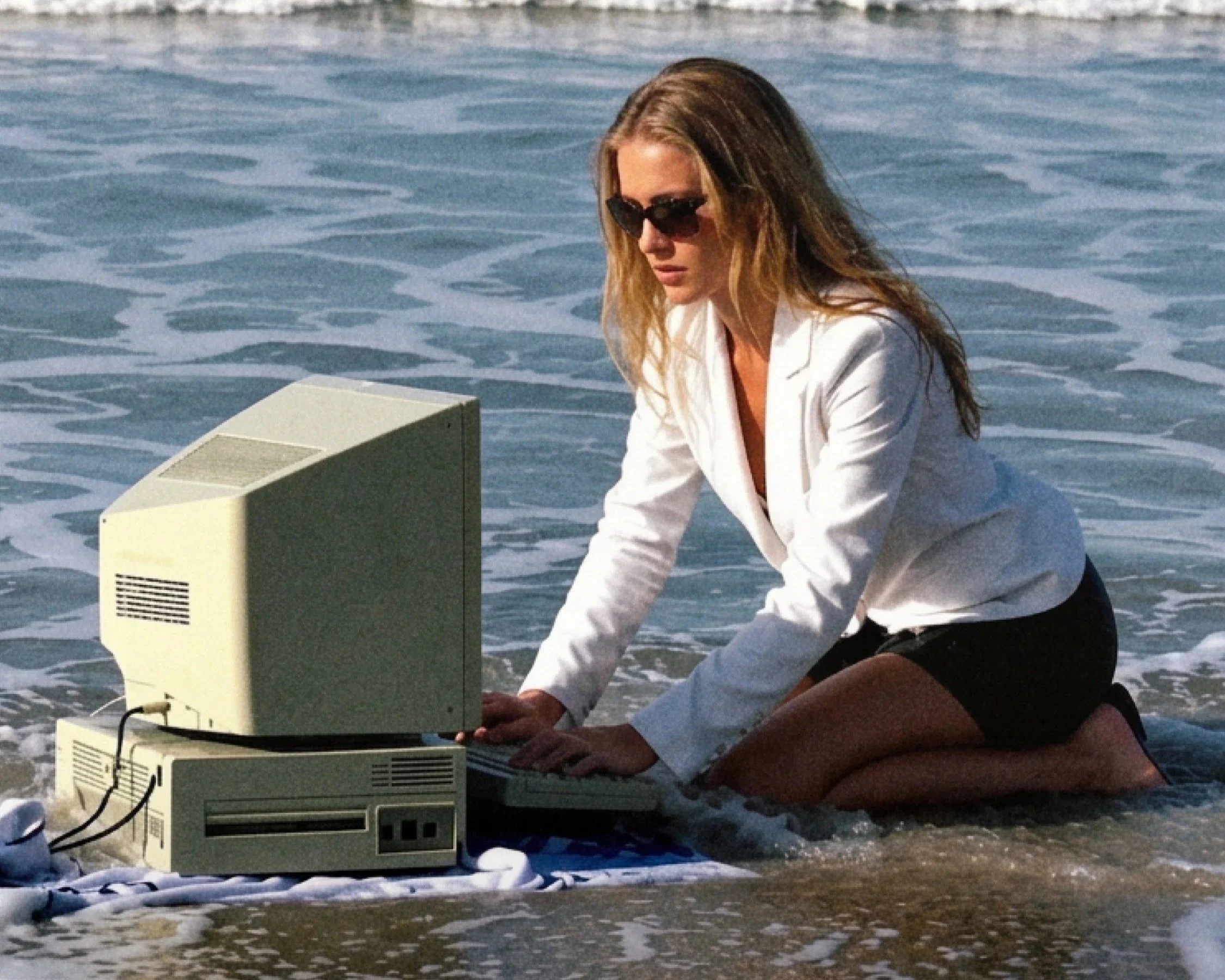
Beyond Growth
For years, I thought the goal of business was growth. Not because I had some particularly simplistic view of what makes a good company, but because growth was the language through which we tended to understand progress. I have been a CEO, built companies, worked internationally, and spent much of my career thinking about sustainability and what it means to build businesses that can endure. I have chased ambitious goals, worried about revenue, thought about strategy, teams, and customers, and spent plenty of time looking at the familiar lines on a graph that tell us whether a business is moving in the right direction. Growth was simply part of the landscape.
Then, at some point, I started asking a different question: what if the real goal is to build something you actually want to stand in?

Working Differently
Happy August, my dear readership,
I hope that your summer was all that you wished for, and if it wasn’t, I hope that you managed to find some peace and glimmers in what was given to you this year. I have decided to start treating Substack slightly differently (not that I ever had a full-blown strategy), but I do feel that I haven’t used it in a way to serve the purpose that I originally intended.
With Substack, as with many social media platforms, there is a very small window in the beginning where it serves the writers, creators, artists, and entrepreneurs with smaller followings (I missed that window) before it just starts working in the favor of the large accounts (unless you devote your heart and soul to a platform). I clearly haven’t done that, and when I was debating whether to stay or not, I did realize that what I care about is my small but mighty readership, the ease of the platform, and the aesthetic when it lands in your inbox.

The Biggest Career Lie I Believed About “Security”
To start this piece, which could very well turn into a rant, I am going to tell a very long story in one sentence. For years I was told that as an entrepreneur, founder, or solopreneur, I was living a life on the edge.
Let me get into it. There were always questions. How do you find customers? What about your pension? Where is your sense of belonging? And to be fair, these are not bad or invalid questions. They are important. What I have struggled with, however, is the solution that was always presented on the other side. Employment. The same secure, stable, forever path.

The Lesser Known Social Entrepreneurs(All Social Entrepreneurs)
This is not one of those lists that has the only 5 famous social entrepreneurs to ever have existed, it seems, such as Bill Drayton, Blake Mycoskie Muhammad Yunus etc., just so I can boost my SEO. If you don’t know who they are then just check one of the exhaustive lists of the top 5 social entrepreneurs out there. This is a list showcasing, as the title suggests, the lesser known social entrepreneur, the guy, girl or non-binary person that shows us that ‘We We All Needed’ (see what I did there?) regardless of our means.

Moving Wealth Down the Ladder
I recommend you read through the report but one of the biggest takeaways for me was that 50% of social enterprises, the world over, are led by women. So, maybe it is that as more traditional businesses shift to include social upsides that women and those that need help most in our societies (on a truly global scale) will benefit? The jury is still out on this obviously, but the possibility is there because this is why businesses existed in the beginning, to create value for all stakeholders not just shareholders.

5 Books That Inspired Me To Become A Social Entrepreneur
What Is a Social Entrepreneur? According to the dictionary a Social Entrepreneur is a person who pursues novel applications that have the potential to solve community-based problems. I would add that there is often a systematic thought to their approach.

Small business, big impact: how to grow your business’ social impact
We don't need the title of “social entrepreneur,” “impact leader,” “ecopreneur” or “changemaker” to do something that matters. We are all needed on this journey towards a healthier planet and humanity. Often we have skills or connections that are too obvious for us to realize that we can create impact with.

The WHO behind the WHY
The WHY, the purpose, the calling, the quest, there are many words for the same concept. We spend so much time pondering this as business owners, because perhaps we are convinced that this is where the rubber meets the road. But have we forgotten to peel off the last layer? Is there something beyond the WHY? I like to believe so, and let me tell you why.

5 Things Gardening Has Taught Me As An Entrepreneur
I had a vision of what I wanted it to look like and how I wanted to feel tending to it, however I was acutely aware of the fact that if I planted beetroot I would (at best) get beetroot and not cucumbers. The seeds you choose matter, because what you plant will (hopefully) grow.

Not growing weeds
After a week with tons of meetings in the scale-up world of how to create growth in your business as well as how to pivot into growth in hard times, I'm tapped-out on growth strategies. Being a meditation teacher I often talk about making the time for a practice and all the benefits it might give you. Even so (with full respect) it is hard to carve out the time. But if we step back and think about it for a moment- what happens when we don't take our time for grounding and want to grow anyway? Personally, I think we end up creating a world full of weeds.

The Mexican fisherman
An American investment banker was at the pier of a small coastal Mexican village when a small boat with just one fisherman docked. Inside the small boat were several large yellowfin tuna. The American complimented the Mexican on the quality of his fish and asked how long it took to catch them.